What happens during a kitchen remodel in Indianapolis
A process guide: scope, permits, inspections, materials sequencing, and change orders. The steps between signing and closeout, with no durations stated.
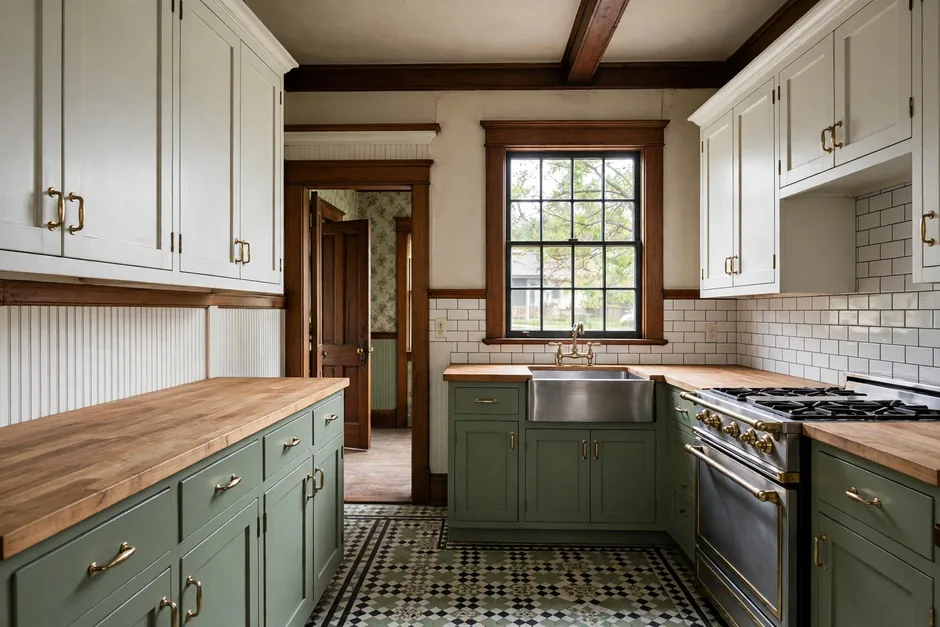
This post explains what happens during a kitchen remodel in Indianapolis: the steps, the order they happen in, and the points where the sequence pauses for review, materials, or decisions. It makes no claim about how long any step takes, because the sequence depends on scope, on the condition of the house, and on decisions made along the way. If your kitchen remodel feels slow, the explanation is usually found in the sequence below, not in any single step.
The sequence, in order
Most kitchen remodels follow the same order of steps, with some steps overlapping and some revisiting earlier ones:
- Scope and selections. The layout, the materials, the fixtures, and the appliances are settled in writing, with allowances and exclusions stated. Selections settled here keep later steps moving; selections left open hold them up.
- Permits. Where the scope requires them, permit applications go in and review follows. Work that needs a permit does not start before the permit is in hand.
- Ordering. Cabinets, countertops, and appliances are ordered against the settled scope, so materials arrive for the steps that need them.
- Demolition and discovery. Existing finishes come out, and the condition of what sits behind them is found. Concealed conditions discovered here can change the scope that follows.
- Rough-in. Structural, plumbing, and electrical work is carried out behind walls and under floors, before finishes close those spaces up.
- Inspections. Defined stages pause for inspection, as described below.
- Finishes. Cabinets, countertops, tile, flooring, painting, trim, and fixtures are installed in an order that protects finished work from later steps.
- Closeout. Final inspection and closeout paperwork complete the permitted scope, and the punch list of remaining items is worked through.
Permits: the review step
Kitchen work that changes layout, plumbing, electrical, or structure generally requires permits. Cosmetic-only work with no structural, electrical, plumbing, or layout change is described in secondary sources as exempt; that description is not a ruling on your kitchen. Confirm the requirements for the specific address with the Department of Business and Neighborhood Services (BNS). Where exterior changes are involved and the house sits inside a locally designated historic district, historic review comes before the building permit, with parcel-level boundary checks. No processing-time figure is stated here; processing expectations are confirmed with BNS at the time of the project.
Inspections are hold points, not paperwork
Inspections pause the sequence at defined stages. Rough-in work is inspected before finishes close it up, and later stages are inspected before the work is treated as complete. When an inspection finds work that must be corrected, the correction is made and the stage is inspected again. That loop is part of the process, not a failure of it, and it is one of the points where a sequence that looked simple on paper takes longer than expected. No inspection-stage count or scheduling figure is stated here; the stages and the scheduling position are confirmed with BNS.
Materials sequencing: order before the step that needs them
Cabinets, countertops, and appliances are ordered against the settled scope so they arrive for the steps that need them. When materials arrive after the step that needs them, later steps wait. When selections change after ordering, the order changes with them. The sequencing rule is simple to state and easy to break: settle selections, order against them, and start demolition with the ordering position known. A kitchen opened up before its materials are ordered is a kitchen whose later steps have nothing to stand on.
Change orders and concealed conditions
Changes after work starts ripple through permits, materials, and sequence. A changed layout can mean changed rough-in; a changed fixture can mean a changed order; either can mean a changed inspection stage. That is why scope and selections are settled before work starts, and why changes are priced, agreed, and recorded in writing rather than by conversation.
Concealed conditions ripple the same way. Plaster and lath, balloon framing, galvanized and cast-iron plumbing, knob-and-tube wiring, and older electrical services are era-typical encounters in Indianapolis homes, verified per house once surfaces are opened. In pre-1978 homes, the federal EPA Renovation, Repair, and Painting (RRP) Rule applies to renovation work, and asbestos survey or abatement may be needed for older materials. A written process for concealed conditions, agreed before work starts, keeps discovery from becoming dispute.
What homeowners control
Homeowners control the decisions the sequence waits on: selections made on the agreed order, a single decision-maker where the household needs one, and a written scope that both sides work from. The questions worth asking at the start are about sequence, not about speed: what order do the steps follow, which stages pause for inspection, how are changes priced and recorded, and what happens when concealed conditions are found. The guide to choosing a remodeler in Indianapolis covers the wider verification questions.
Common mistakes
- Demolition before ordering. Opening the kitchen before materials are ordered leaves later steps waiting on arrivals.
- Vague scope. A scope that leaves selections, allowances, and exclusions unstated cannot hold a sequence together.
- Late selections. Selections made after the steps that need them hold up ordering and the work that follows.
- Treating inspections as optional. Inspection stages are hold points in the permitted sequence, not paperwork to work around.
- Changes by conversation. Changes agreed verbally and never recorded are the most common source of disagreement at closeout.
When to call a professional
Call a professional when the scope touches structure, moves plumbing or electrical work, or follows water damage, and call before demolition when the sequence questions above are still open. A kitchen remodel is a sequence before it is a set of finishes. For the figures behind kitchen scope, the guide to kitchen remodeling cost in Indianapolis carries the labelled Cost vs. Value 2025 report figures.
Sources: Residential Permit Checklist (City of Indianapolis / BNS).
Frequently Asked Questions
Why is my kitchen remodel taking so long in Indianapolis?
The usual explanation is found in the sequence: permit review, inspection hold points, materials ordered against the settled scope, change orders, and concealed conditions found once surfaces are opened. This post states no durations. Ask about the order of steps, the inspection stages, and how changes are recorded.
What permits does a kitchen remodel need in Indianapolis?
Work that changes layout, plumbing, electrical, or structure generally requires permits. Cosmetic-only work with no such changes is described in secondary sources as exempt. Confirm the requirements for your address with the Department of Business and Neighborhood Services (BNS).
What happens at a kitchen remodel inspection?
Work pauses at defined stages so the stage can be inspected before later work closes it up or treats it as complete. Work that must be corrected is corrected and the stage is inspected again. The stages and scheduling position are confirmed with BNS.
Why do materials hold up a kitchen remodel?
Cabinets, countertops, and appliances are ordered against the settled scope so they arrive for the steps that need them. Materials that arrive after the step that needs them, or selections changed after ordering, hold up the steps that follow.
How do change orders affect a kitchen remodel?
Changes after work starts ripple through permits, materials, and sequence. Settle scope and selections before work starts, and agree in writing how changes are priced, agreed, and recorded.
Get help with your kitchen remodel in Indianapolis
Call Noahs Remodeling LLC at (317) 978-4904 to talk about your project.