How to choose a remodeler in Indianapolis
An honest chooser guide: BNS listing context, the questions that matter, comparing itemized bids, references, and red flags. General information, not a shortcut.
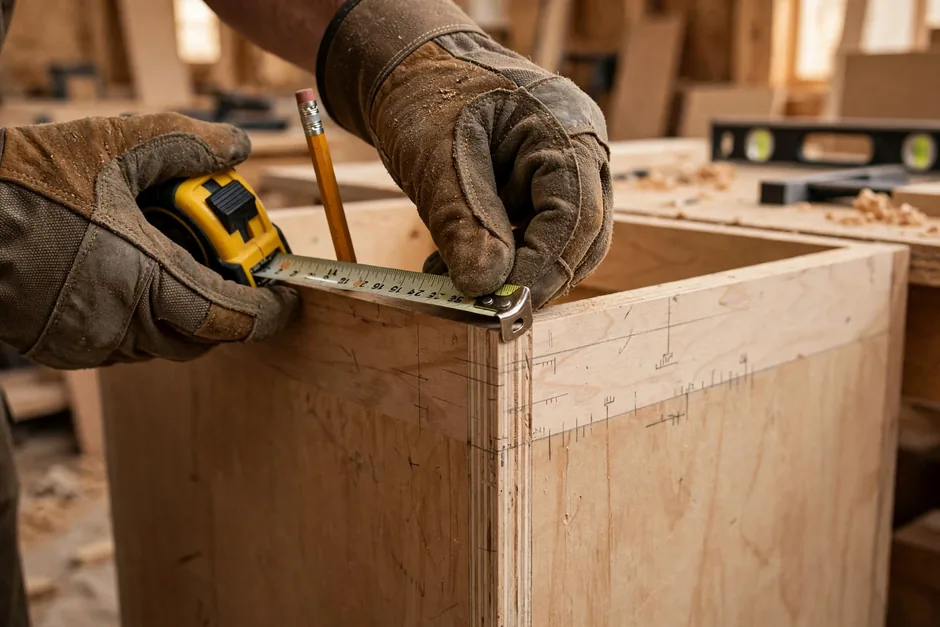
Hiring a remodeler is a verification exercise before it is a design exercise. The checks that matter are unglamorous: the regulatory picture, a written scope, references you actually call, and a clear process for the things nobody can see until walls are opened. This guide walks through those checks in order. It is general information about hiring any remodeler, not a claim about any one business.
Start with the regulatory picture
Indiana has no statewide general-contractor or remodeler licence. Only plumbing is licensed at the state level. In the consolidated city, the operative requirement is local listing with the Department of Business and Neighborhood Services (BNS) under Revised Code Chapter 875. That is the general position, stated here as general information; the listing position of any individual business is confirmed with BNS.
There is no statewide remodeler registration number to ask for, and no state portal that settles the question. Ask instead how the business’s BNS listing can be verified with BNS, and treat a plain answer as a good sign and evasion as information.
Separately, Indiana’s Home Improvement Contracts Act sets written-contract and cancellation requirements for home improvement work. It is contract law, not a licence, and compliance with it is not the same as holding a licence. Confirm the current text of the Act before relying on any summary of it, and never accept a claim that contract-law compliance is the same as holding a licence. No dollar threshold is stated here.
Match the remodeler to the project type
Remodeling is not one trade. A business whose recent work matches your scope, a kitchen, a bathroom, a basement, an addition, is a better fit than a generalist whose recent work does not. Ask for examples of completed work similar in scope to yours, and ask to see it. Photographs help; addresses or introductions to past clients help more. If the business cannot show recent work of your type, that is an answer, not a gap in the portfolio.
Indianapolis housing stock makes this matching matter. Pre-war homes bring plaster, older plumbing, and older wiring; postwar ranches bring their own layout and systems questions; newer subdivisions bring association rules. A remodeler who has scoped your era of house will ask better questions at the first visit.
Questions to ask before you sign
Ask these before signing anything. The answers matter less as individual facts than as a pattern: plain answers signal a business that expects scrutiny, and deflection signals the opposite.
- How can your BNS listing be verified with BNS?
- Who is the on-site lead, and who supervises the work day to day?
- What is the payment schedule, and how is each payment tied to completed stages of work?
- How are change orders priced, agreed, and recorded?
- Who is responsible for each permit, and how is that recorded?
- How are concealed conditions handled when they are found during the work?
- What happens if something fails after completion, and where is that stated in writing?
- How are dust control and daily cleanup handled in an occupied home?
- What is the process if the two sides disagree on the quality of a finished item?
- Can you provide references from recent projects similar in scope to mine, whom I can call?
Comparing bids: scope first, price second
Compare multiple itemized bids generally, on the same written scope. No rule about how many bids to collect is stated here as fact; the point is comparison on equal terms. Ask each bidder to itemize labor, materials, permits, and any contingency line, and to state allowances plainly. A bid that is far lower than the others usually means the scope is thinner, the allowances are light, or something is excluded. Ask what is excluded before treating the difference as a saving.
Scope documents deserve the same scrutiny as numbers. A scope that names materials generically, leaves finishes to allowances, or omits permit responsibility is not a comparable scope. Get the scope in writing, with the payment schedule and the change-order process, before work starts.
References and reviews: what to actually check
Call the references. Ask whether the project finished as agreed, whether the final invoice matched the contract, and whether the reference would hire the business again. Listen for specifics; vague praise tells you little, and specific friction tells you much. Reviews are a supplement, not a substitute. Read critical reviews first, because they tend to describe real friction points, and read how the business responded.
Ratings alone verify nothing about listing status, scope quality, or permit practice. Treat them as one input among several, and never as the check itself.
Red flags
- Pressure to sign on the spot. A price that expires before you can compare it is a sales tactic, not a construction reality.
- No written contract. Home improvement work carries written-contract requirements under Indiana law. A business that resists putting scope, payment, and process in writing is telling you something.
- Pressure for large payment before work starts. Payments tied to completed stages protect both sides. Demands for large sums up front do not.
- Permit avoidance. A remodeler who suggests skipping permits is asking you to carry the risk of unreviewed work. The permit question is answered by BNS for the address, not by the bidder.
- Vague scope. A one-line scope with no materials, no allowances, and no exclusions cannot be compared with anything.
- No verifiable local presence. A business that cannot be reached at a local address and phone number is hard to hold to account after completion.
When to call a professional
Call a professional when the project touches structural walls, electrical panels, plumbing rough-in, or gas lines, or when the scope is large enough that a mistake cannot be absorbed. Cosmetic work such as painting and trim is a reasonable project for a capable homeowner; moving a load-bearing wall is not. If you are unsure whether a wall is load-bearing, that uncertainty is the answer: call.
To see the work this business describes, start with the services pages, including kitchen remodeling and bathroom remodeling, or read the about page for the business’s own description of its scope.
Sources: Contractor Licenses (City of Indianapolis / BNS); Plumbing Licensing Information (Indiana Professional Licensing Agency).
Frequently Asked Questions
How do I choose a remodeler in Indianapolis?
Match recent similar work to your project, verify the BNS listing position with BNS, compare multiple itemized bids on the same written scope, and call references. Choose on scope, verification, and references together, not on the lowest number alone.
What should I ask a home remodeling contractor in Indianapolis?
Ask how the BNS listing can be verified, who leads the work on site, how payments tie to completed stages, how change orders are priced and recorded, who is responsible for each permit, and how post-completion issues are handled in writing. Plain answers are a good sign.
How do I check a remodeler’s standing in Indianapolis, Indiana?
Indiana has no statewide general-contractor or remodeler licence; only plumbing is state-licensed, and local BNS listing under Revised Code Chapter 875 is the operative requirement in the consolidated city. Confirm any business’s listing position with BNS. There is no statewide registration number or state portal that settles the question.
How many remodeling bids should I get in Indianapolis?
No bid-count rule is stated here as fact. Compare multiple itemized bids on the same written scope, with labor, materials, permits, allowances, and any contingency line stated, so the comparison reflects scope rather than presentation.
Who is responsible for permits on a remodeling project?
That is agreed per project and should be recorded in writing before work starts. Confirm which permits apply for the address with the Department of Business and Neighborhood Services (BNS), and never let a bidder decide the permit question alone.
Get help with a remodeler in Indianapolis
Call Noahs Remodeling LLC at (317) 978-4904 to talk about your project.