Basement finishing cost in Indianapolis: 2025 Cost vs. Value
One labelled figure from the Cost vs. Value 2025 report for Indianapolis, and the basement conditions that move any budget. These are not Noahs Remodeling LLC prices.
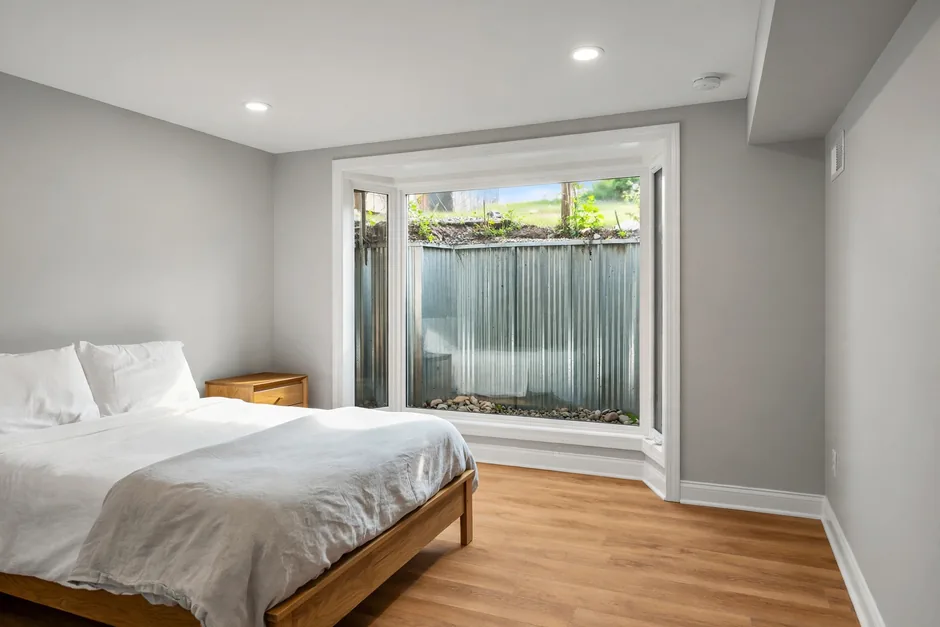
There is no single price for finishing a basement in Indianapolis, because no two basements present the same conditions. This post does two honest things instead: it states the one labelled third-party figure available for this market, and it explains the conditions that move any basement scope. Nothing here is a Noahs Remodeling LLC price, and no figure here should be treated as a quote for your basement.
The Cost vs. Value 2025 figure for a basement remodel
The Remodeling Magazine Cost vs. Value 2025 report lists one basement project for the Indianapolis market:
Basement Remodel: job cost $48,108; resale value $47,609; 99.0% recouped.
Source: Remodeling Magazine Cost vs. Value 2025, Indianapolis market (JLC, 2025 report). Job costs are survey estimates; resale values are Realtor-survey estimates, not sale prices or guarantees. These are not Noahs Remodeling LLC prices. The scope the report prices is the report’s own definition of a basement remodel. Compare it line by line with any bid scope rather than assuming it matches your basement, and read the recoupment figure for what it is: a survey estimate, not a sale price and not a promise about any individual home.
For the report itself, see the Cost vs. Value 2025 Indianapolis market page (JLC).
What the figure does not tell you
A survey figure describes a defined scope in a defined market. It does not describe your basement. The report’s Indianapolis recoupment figures run materially lower than regional and national figures for major kitchen, bath, and primary-suite work, which is one more reason not to substitute figures from another market or another dataset. This post uses only the Cost vs. Value 2025 Indianapolis figures, and it does not blend them with any other firm’s ranges or any aggregator’s bands.
Resale value in this report means Realtor-survey estimates. It is not a sale price, not an appraisal, and not a return promise. A finished basement is usually pursued because the household needs the living space; any resale effect depends on the house, the work, and the market at the time of sale.
What moves a basement budget in Indianapolis
Basement scope in Indianapolis is driven by conditions found in the house, not by finish choices alone. The factors below are the ones the evidence supports, in the order that matters for scoping:
- Moisture and hydrostatic pressure. Clay soils and groundwater pressure are part of basement planning in this market. Finish work laid over unresolved water intrusion fails, so moisture investigation and any waterproofing scope come before finishes. Finishing first and dealing with water later is the most expensive order of operations there is.
- Ceiling height and finish feasibility. Older cellars, especially in pre-war homes, can have limited height. Whether a basement can become comfortable habitable space depends on the height rules in the residential code and on what the existing structure allows. No dimension is stated here; the rules are confirmed for the specific house.
- Egress rules for bedrooms. A basement bedroom must meet emergency escape and rescue opening rules and ceiling-height rules. If the plan includes a bedroom, those rules shape the scope from the start, including any new window openings. Confirm the requirements with the Department of Business and Neighborhood Services (BNS) for the address.
- Plumbing, electrical, and layout changes. Adding a bathroom, moving plumbing, or changing electrical scope adds trade work and permit review. A bathroom remodel tucked into a basement plan is a second scope inside the first, with its own drivers.
- Older-stock concealed conditions. Plaster and lath, balloon framing, galvanized and cast-iron plumbing, knob-and-tube wiring, and older electrical services are era-typical encounters in Indianapolis homes. Each is verified per house, and each can add scope once walls and floors are opened.
- Lead and asbestos in pre-1978 homes. The federal EPA Renovation, Repair, and Painting (RRP) Rule applies to renovation work in pre-1978 homes, with firm certification and work-practice requirements. Asbestos survey or abatement may be needed for older materials. Both add scope and sequencing constraints; details are confirmed for the specific house.
- Radon. Marion County is EPA Radon Zone 1. Testing answers the question for a specific house, and any mitigation is scoped from the result.
- Floodplain position. Floodplain checks are parcel-level. No area-wide flood claim is made here; the check is run for the specific address.
- Mechanical capacity. Heating, cooling, and electrical capacity must serve the new living space. In older homes, that check can add scope before finishes are even discussed.
- Foundation and settling conditions. Foundation and settlement assessment is a standard scoping step in older stock, verified per house.
Basement finishing and permits
Basement finishing generally requires permits, covering structural work and the trades involved. That is the general position; the requirements for a specific address are confirmed with BNS. Cosmetic-only exemptions described in secondary sources do not cover finishing a basement into habitable space. Never assume no permit is needed for a specific project.
Where the house sits inside a locally designated historic district, exterior changes such as a new egress window can also involve historic review. That check is parcel-level and address-by-address, as explained in the guide to finishing a basement in Fountain Square.
How to compare basement bids honestly
Compare itemized scopes, not bottom-line numbers. Two bids for the same basement can differ because one includes moisture work, egress work, or trade scope that the other leaves out. Ask what moisture investigation is included, how concealed conditions found during the work are priced and agreed, and what is expressly excluded. A bid that is far lower than others usually reflects a thinner scope, and the missing scope still has to be paid for somewhere.
It also helps to compare multiple itemized bids generally, on the same written scope, so the differences reflect scope and approach rather than guesswork. Our guide to choosing a remodeler in Indianapolis explains the questions that matter before signing anything.
When to call a professional
Call a professional when the basement shows water intrusion, foundation concerns, or signs of settling; when the plan includes a bedroom and egress rules come into play; or when the house is old enough that concealed conditions, lead, or asbestos are part of the picture. Basement finishing in older Indianapolis stock is a conditions-first project, and the conditions are found by looking, not by assuming.
Frequently Asked Questions
How much does basement finishing cost in Indianapolis?
The Cost vs. Value 2025 report lists a Basement Remodel for the Indianapolis market at a job cost of $48,108, with a resale value of $47,609 and 99.0% recouped. Job costs are survey estimates and resale values are Realtor-survey estimates, not sale prices. These are not Noahs Remodeling LLC prices.
Is finishing a basement worth it in Indianapolis?
The report’s recoupment figure is a survey estimate, not a promise about any individual home. Whether finishing makes sense depends on the household’s need for living space and on the basement’s moisture, height, egress, and systems conditions. No figure in this post is a return promise.
Do I need a permit to finish a basement in Indianapolis?
Basement finishing generally requires permits covering structural work and the trades involved. Confirm the requirements for your address with the Department of Business and Neighborhood Services (BNS). Never assume no permit is needed for a specific project.
What makes a basement bedroom legal in Indianapolis?
A basement bedroom must meet the residential code’s emergency escape and rescue opening rules and ceiling-height rules. No dimensions are stated in this post. Confirm the requirements with BNS for the specific house before planning a bedroom.
Why does moisture come first in a basement project?
Clay soils and hydrostatic pressure make moisture a first-order question in Indianapolis basements. Finish work over unresolved water intrusion fails, so moisture investigation and any waterproofing scope come before finishes.
Get help with basement finishing in Indianapolis
Call Noahs Remodeling LLC at (317) 978-4904 to talk about your project.